

Molecular Diagnostics and Oncogenetics Laboratory
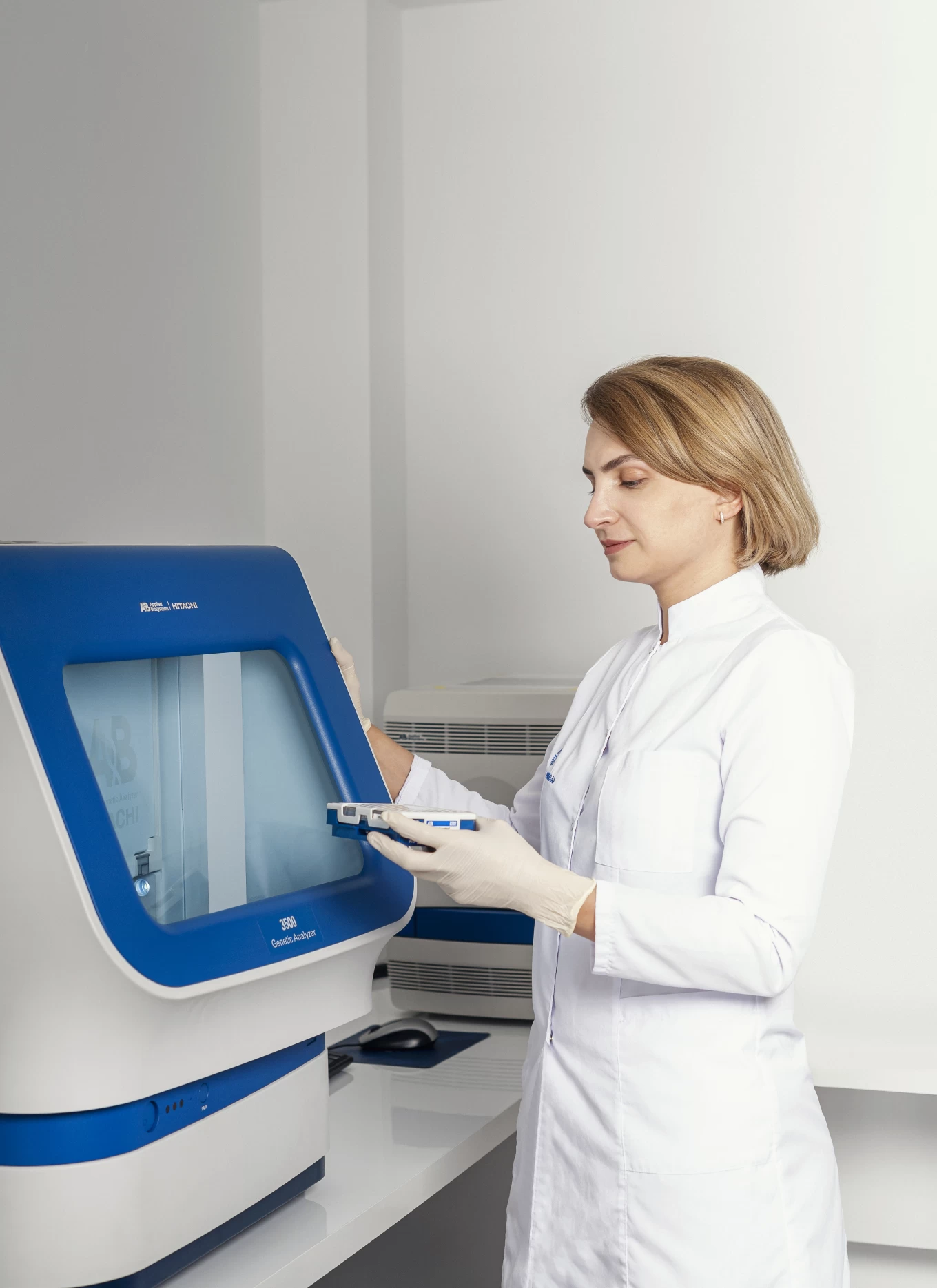
The Molecular Diagnostics and Oncogenetics Laboratory is equipped with high-tech medical equipment manufactured by Thermofisher Scientific, such as:
-
3500 Series Genetic Analyzer
-
QuantStudio™ 5 Real-Time PCRSystem
-
7500 Real-Time PCR System
Using the most advanced equipment, it is possible to isolate a human chain of DNA and RNA, determine the sequence of its constituent links - nucleotides - and the mutations that occur in it.
Genetic material extracted directly from cancer cells is tested for the presence of different types of mutations, which is important for cancer patients planning to start treatment.
Taking individual mutations into account enables targeted medication selection, making the treatment process more effective and more personalised.
The types of mutations that can be tested are as follows:
Colorectal Cancer Mutation Panel
- KRAS
- NRAS
- BRAF
- PIK3CA
- AKT 1
Lung Cancer Mutation Panel:
- ALK
- ROS
- RET
- MET
- EGFR
BRAF gene mutation
IDH ½ (isocitrate dehydrogenase ½)
DPYD 2A polymorphism to determine sensitivity to chemotherapy
Instability of MSI microsatellites
Hereditary predisposition to various diseases is well known, and the same is true for oncological processes. Oncogenetic studies make possible the determination of the genetic genesis of diseases such as colorectal cancer, prostate cancer, breast cancer, ovarian cancer, endometrial cancer and pancreatic cancer.
Testing for mutations in the BRCA1/2 genes is essential.
Testing is recommended for individuals with a strong family history (two or more cases of cancer in first- or second-degree relatives) and for patients with a strong personal history (cancer diagnosed before the age of 50, ovarian and breast cancer at the same time, cancer with metastatic lesions).
The 8 major mutations in the BRCA1/2 genes account for 98% of all mutations in these genes. The test is performed both in the blood to detect an inherited tumor and in tumour cells to determine the course of treatment.
Lifestyle adjustments and regular screening can therefore not only diagnose various types of cancer at an early stage, prevent neglected cases and associated complications, and provide effective treatment, but also in some cases prevent the diseases themselves.
The laboratory also studies the presence of a tendency to thrombosis, which is important for patients with cardiovascular diseases. Due to the severity of its consequences, thrombophilia plays an important role in obstetric and reproductive practice
Of the many known genetic factors that cause thrombophilia, the following genetic disorders have been confirmed and recommended for testing
- FV Leiden mutation
- FII Prothrombine mutation
- PAI-1 4G/5G mutation
- MTHFR C677T mutation
- MTHFR A1298C mutation
The Molecular Diagnostics Department can also detect sexually transmitted infections with 12 different genotypes using the polymerase chain reaction method, including:
- Mycoplasma Genitalium
- Mycoplasma Hominis
- Ureaplasma Urealyticum
- Ureaplasma Parvum
- Neiseria Gonorrheae
- Gardnerella Vaginalis
- Treponema Pallidum
- Trichomonas Vaginalis
- Chlamydia Trachomatis
- Herpes Simplex Virus type-1
- Herpes Simplex Virus type-2
- Trichomonas Vaginalis
In addition, high oncogenic risk papillomavirus genotypes are also determined.
ინფექციური და ვირუსული დაავადებების მოლეკულური დიაგნოსტიკა
სქესობრივი გზით გადამდები ინფექციები (STI)
სქესობრივი გზით გადამდები ინფექციები წარმოადგენს გლობალურად გავრცელებულ დაავადებათა ჯგუფს, რომელიც ხშირად უსიმპტომოდ მიმდინარეობს და დაკავშირებულია გრძელვადიან გართულებებთან.
კვლევა ტარდება რეალურ დროში პოლიმერაზული ჯაჭვური რეაქციის (RT-PCR) მეთოდით, რაც უზრუნველყოფს მრავალპათოგენურ დეტექციას ერთ ბიოლოგიურ ნიმუშში, მაღალი სიზუსტითა და სენსიტიურობით.
კვლევა უზრუნველყოფს შემდეგი პათოგენების იდენტიფიკაციას:
- Mycoplasma hominis
- Mycoplasma genitalium
- Ureaplasma urealyticum
- Ureaplasma parvum
- Neisseria gonorrhoeae
- Gardnerella vaginalis
- Treponema pallidum
- Trichomonas vaginalis
- Chlamydia trachomatis
- Herpes simplex virus 1 და 2 (HSV-1, HSV-2)
ადამიანის პაპილომავირუსის (HPV) გენოტიპირება
ადამიანის პაპილომავირუსი წარმოადგენს ერთ-ერთ ყველაზე გავრცელებულ სქესობრივად გადამდებ ინფექციას და მნიშვნელოვან ეტიოლოგიურ ფაქტორს სხვადასხვა ონკოლოგიური დაავადების განვითარებაში, განსაკუთრებით საშვილოსნოს ყელის კიბოს შემთხვევაში.
RT-PCR-ზე დაფუძნებული გენოტიპირება უზრუნველყოფს მაღალი ონკოგენური რისკის მქონე HPV ტიპების იდენტიფიკაციას.
ტესტირება გამოიყენება:
- ინფექციის ადრეული დიაგნოსტიკისთვის
- ონკოგენური რისკის სტრატიფიკაციისთვის
- კლინიკური მონიტორინგისა და პრევენციული მართვის დაგეგმვისთვის
ვირუსული ინფექციები (HCV, HBV, HIV)
- C ჰეპატიტის ვირუსის RNA (HCV RNA)
- B ჰეპატიტის ვირუსის DNA (HBV DNA)
- ადამიანის იმუნოდეფიციტის ვირუსის RNA (HIV RNA, ვირუსული დატვირთვა)
მოლეკულური ტესტირება გამოიყენება ინფექციის ადრეული გამოვლენის, ვირუსული დატვირთვის რაოდენობრივი შეფასებისა და ანტივირუსული თერაპიის ეფექტურობის მონიტორინგისთვის.
მემკვიდრული გენეტიკური ტესტები
მემკვიდრული თრომბოფილია
მოლეკულურ-გენეტიკური კვლევა, რომელიც განსაზღვრავს ინდივიდის გენეტიკურ წინასწარგანწყობას თრომბოზის განვითარების მიმართ.
შეისწავლის:
- Factor V Leiden (F5, G1691A)
- Prothrombin (F2, G20210A)
- MTHFR (C677T, A1298T)
- PAI-1 (4G/5G)
კვლევა განსაკუთრებით რეკომენდირებულია თრომბოზული მოვლენების, რეპროდუქციული გართულებებისა და ოჯახური ანამნეზის არსებობის შემთხვევაში.
ცელიაკია (გლუტენის აუტანლობა)
ცელიაკია წარმოადგენს აუტოიმუნურ ენტეროპათიას, რომელიც დაკავშირებულია გლუტენზე იმუნური პასუხის განვითარებასთან. გენეტიკური ტესტირება გამოიყენება დაავადებისადმი წინასწარგანწყობის განსაზღვრისა და დიაგნოსტიკური პროცესის დაზუსტებისთვის.
იმუნოგენეტიკური ტესტები
HLA-B27
HLA-B27 წარმოადგენს გენეტიკურ მარკერს, რომელიც ასოცირებულია სპონდილოართრიტების ჯგუფის აუტოიმუნურ დაავადებებთან.
ტესტირება ხელს უწყობს:
- ადრეულ დიაგნოსტიკას
- დიფერენციულ დიაგნოსტიკას
- მკურნალობის ტაქტიკის განსაზღვრას
ფარმაკოგენეტიკური ტესტები
DPYD გენეტიკური ტესტირება
DPYD გენში არსებული პოლიმორფიზმების განსაზღვრა საშუალებას იძლევა შეფასდეს პაციენტის უნარი მეტაბოლიზირდეს ფტორურაცილზე (5-FU) დაფუძნებული ქიმიოთერაპიული პრეპარატები.
ტესტირება გამოიყენება:
- პრეპარატთან ასოცირებული ტოქსიკურობის რისკის შეფასებისთვის
- ინდივიდუალური დოზირების განსაზღვრისთვის
- უსაფრთხო და ეფექტური მკურნალობის დაგეგმვისთვის
მოლეკულური დიაგნოსტიკური კვლევების შედეგების ინტერპრეტაცია უნდა განხორციელდეს შესაბამისი დარგის სპეციალისტის მიერ, პაციენტის კლინიკურ, ლაბორატორიულ და ინსტრუმენტულ მონაცემებთან კომპლექსურ კორელაციაში. ეს წარმოადგენს ზუსტი დიაგნოსტიკისა და ეფექტური მკურნალობის აუცილებელ წინაპირობას.